

Moving house is often a stressful activity, but moving with a cat can add a whole new level of worry. What if they run away from movers? How do I transport them? What if, when we get there, they can’t find their way back to the new house? It doesn’t have to be so stressful; with a little planning, chances are it will all be ok!
Here are some of our top tips to help the whole process go as smoothly as possible:
Prior to moving
- As soon as you know your move date, it is time to get the cat basket out. Leave it with the door open and include a blanket that your cat has already made their own or one of your t-shirts inside. Offer them a treat in the basket every day to get them used to going in it.
- In the week leading up to the move, allocate your cat a room for move day – this should be a room with a door that you can close securely. Put their water, food, litter tray and toys in the room (but try not to have them all bunched together, no one wants to eat next to their toilet) and plug in calming pheromone diffuser. Feed your cat in this room every day as this will make it seem routine and less scary on move day.
- If needed, speak with your vet about medication that may help your cat’s travel anxiety on the day. You could also try giving your cat one of the many calming supplements on the market.
- Call the microchip company that your pet’s chip is registered with – your vet can tell you who that is if you are unsure. Advise them of your moving date, address and phone number, just in case your cat gets lost. If your cat isn’t already microchipped, do this now.
Moving day
- Feed your cat as usual in their now cat-friendly room, but this time close the door and put a sign on it advising people not to open the door. Make sure that your entire moving party are aware of where the cats are, so that no one accidently lets them out. Cats know when things are different and we would not want them running off and not coming back until everyone is gone. This will be the last room you move, along with the cats.
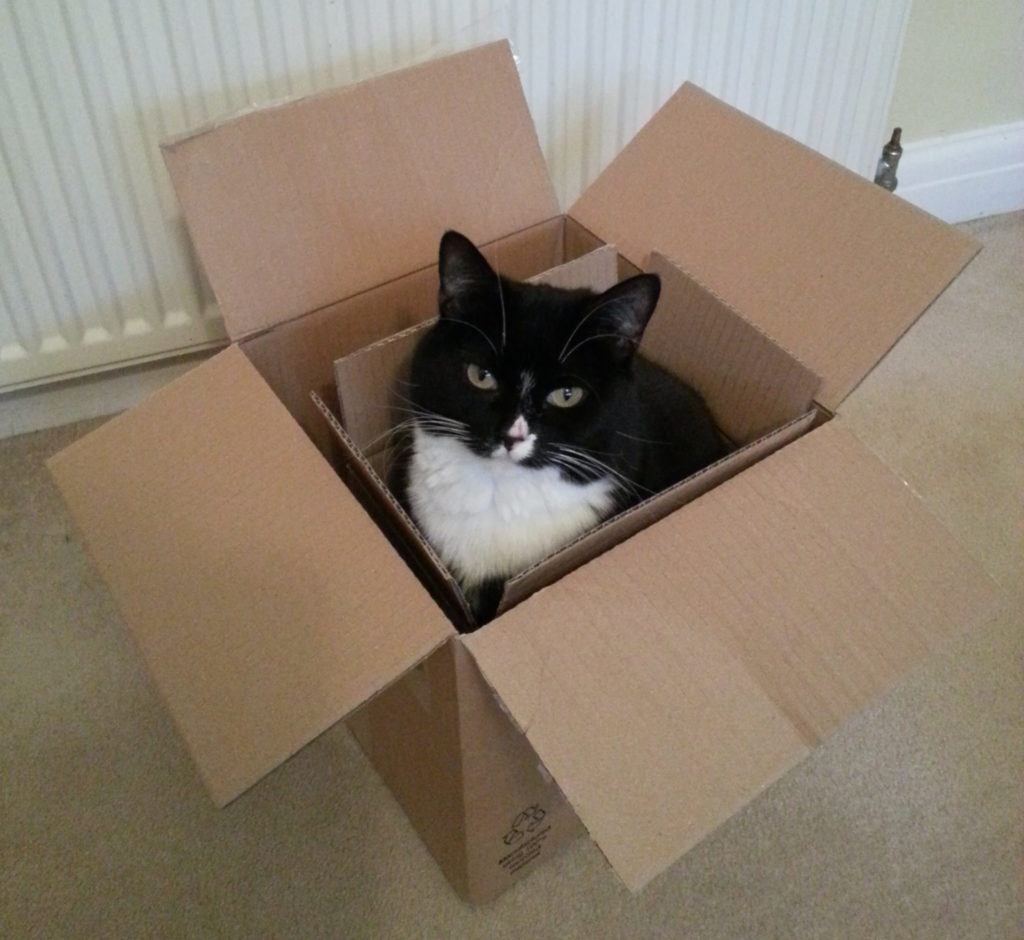
- Allocate a room in the new house for the cat, and as before plug in a Feliway/Pet Remedy diffuser. Stock it with some of your cat’s bedding and toys, providing hiding spaces – cardboard boxes work well for this. Food, water and litter trays will be brought over with the cat (don’t buy new ones, keep to the ones they are used to and smell of their home). This will be their space for the next few days, so make it as homely as possible for them.
- Getting your cat into the carrier to transport them should hopefully be a little easier, as they have seen the basket and have found comfort in it during the lead up to moving. Try placing a few treats in it to encourage the cat to go inside through the front door. If this doesn’t work, try facing them towards you and slowly backing them into the basket. If you really anticipate a struggle, speak with your vet ahead of time as there are many ways to do this without stressing you or the cat.
Letting them out
- Ideally your cat should be kept inside for 4-6 weeks after moving into their new home. During this time, they can be out exploring the house and making it theirs. Additional bowls and litter trays can be placed in the spots where you will want them to stay, but your cat can still have the safety of their room to return to if they wish.
- The week leading up to them being let out you can try putting some of their used litter around the edge of your garden, if you have one, just to help them feel more secure and let the other cats in the area know you have arrived. This may or may not actually help, but is unlikely to cause any harm.
- It’s best to let them out on a day you will be home all day, prior to giving them breakfast so they will be more inclined to come home for food. You could also hang some of your clothes out on the line (unwashed) to provide another familiar scent to make them feel confident in their new environment – again, this may or may not help, but it can’t hurt to try.
- Do not butter their paws as you may have heard from older friends or relatives – while this will not hurt them, it is unnecessary (and probably quite messy!). Cats have scent glands on their feet so as they move around and scratch trees, they leave this scent behind, helping them find their way and mark their territory.
- Finally, try not to worry too much – provided your cat is bonded to you, they will want to be where you are and will come home when they are done exploring. Even if they are not particularly close to you, they are probably pretty fond of their food bowl so that helps too! Unless they have trouble with their vision or hearing, or even if they do, cats are very clever and rarely lose their way. Remember too that even if for some reason they lose their way, their microchip should ensure you are reunited.